Posts Tagged ‘prefabrication’

Engineering Consistency and Quality in Construction

Tuesday, March 31st, 2026

Turning great plans into even better projects, Egan Company’s engineering expertise goes beyond design to keep projects on track, coordinated, and performing as intended in the field. By collaborating across teams from the outset, our engineers develop solutions that enhance safety, efficiency, and consistency from fabrication through installation.
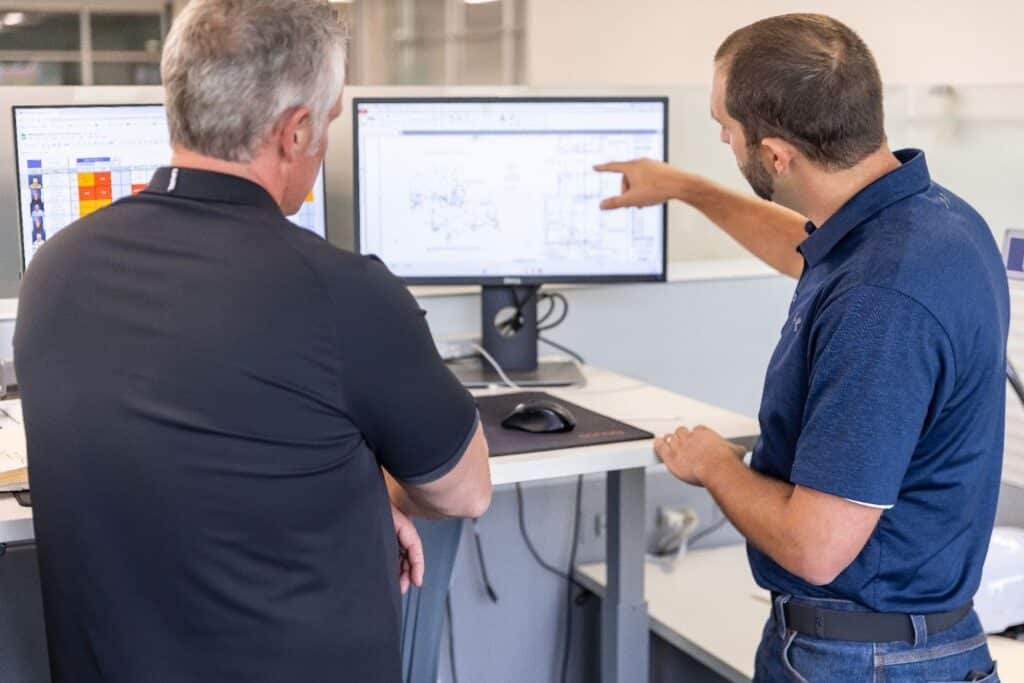
Engineering and design

Rather than operating in silos, Egan’s engineering approach emphasizes shared standards, constructability, and coordination across trades. That alignment allows teams to deliver reliable, repeatable results, regardless of project size or complexity.

Standardization with Real-World Impact

Standardization plays a central role in how Egan engineers approach design. Codes, internal standards, and proven details create a framework that supports quality while still allowing flexibility when conditions demand it.

In some engineering disciplines, strict codes clearly define how structures must be designed and documented. “On the fire alarm side, it’s pretty clear-cut,” said Andrew Hapka, Engineering Supervisor for Technology Systems. “The standards dictate symbol sizes, formatting and what must be included. My job is to meet those requirements.” While other Egan trades operate within similar regulatory boundaries, engineers also balance performance, safety, serviceability, and cost to ensure every system is practical, efficient, and reliable for installation and long-term use. “Codes set the minimum,” said Jake Marchiafava, Mechanical Pre-Construction and Design Manager. “We try to exceed that, but cost is always a factor. The challenge is doing better work without inflating budgets.”

While there are strict codes, Egan’s internal standards also support efficiency in environments. Industrial controls teams rely on standardized CAD tools to maintain consistent panel layouts and spacing. “We’ve standardized our hardware tools in CAD,” said Dan Loney, Engineering Manager for Industrial Controls. “Spacing, parts, layouts—it all feeds into a system that helps the panel shop work faster and more consistently.”

Engineering and design

Even in areas with fewer strict external constraints, consistency remains critical. Standardized layouts, methods, and processes help ensure that work across all trades is accurate, reliable, and repeatable. “That flexibility means what we deliver has to be spot-on,” said Andy Banse, Design and Production Supervisor for InterClad.

Early Prefab Planning

Early planning is another cornerstone of Egan’s engineering philosophy. Identifying prefabrication opportunities early allows systems to be designed with fabrication, transportation, and installation in mind.

Electrical Engineering and VDC Supervisor, Dylan McDonah said early involvement allows engineering to shape how work is built, not just how it looks on paper. “When engineering is involved early, we can design with prefab in mind from the start,” he said. “That makes a big difference once work reaches the field.” This mindset extends across all trades, where engineering teams collaborate with project managers and field leaders to ensure designs align with jobsite sequencing and logistics. The result is safer installs, fewer interruptions, and improved predictability.
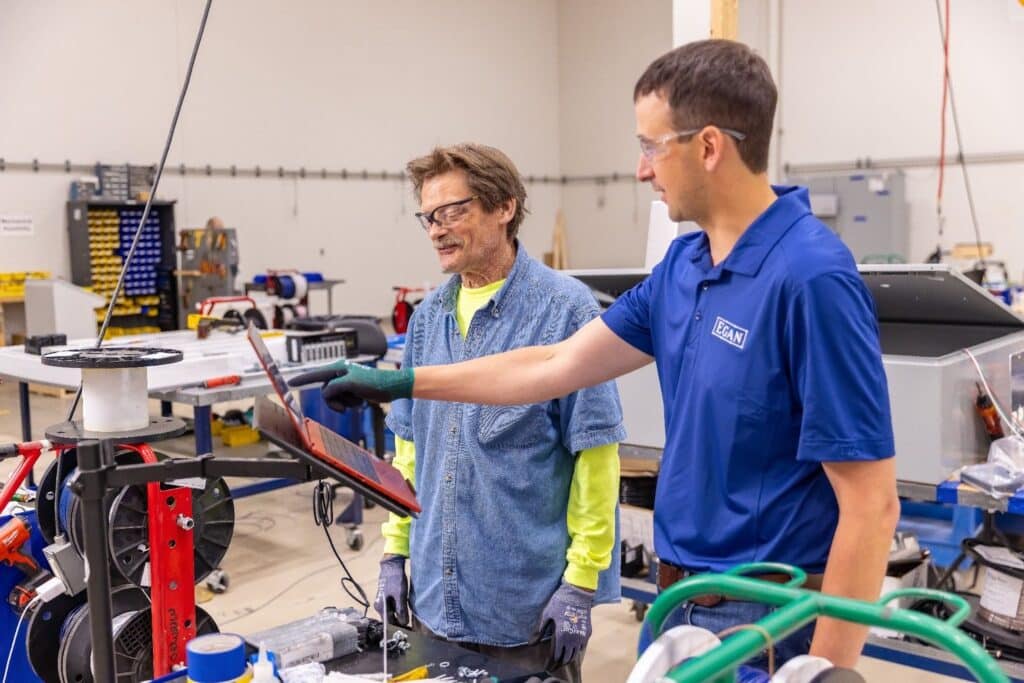
Engineering and design

Coordinating Across Trades

Coordination across trades is a cornerstone of Egan’s engineering approach. Teams rely on detailed modeling, thorough documentation, and continuous communication to ensure every system fits together as intended and performs reliably in the field. Designs are fully dimensioned using real-world components to prevent conflicts during installation. “Everything we draw—valves, fittings, ductwork—is real size,” said Marchiafava. “Many design firms don’t model that way, which leads to issues during construction.”
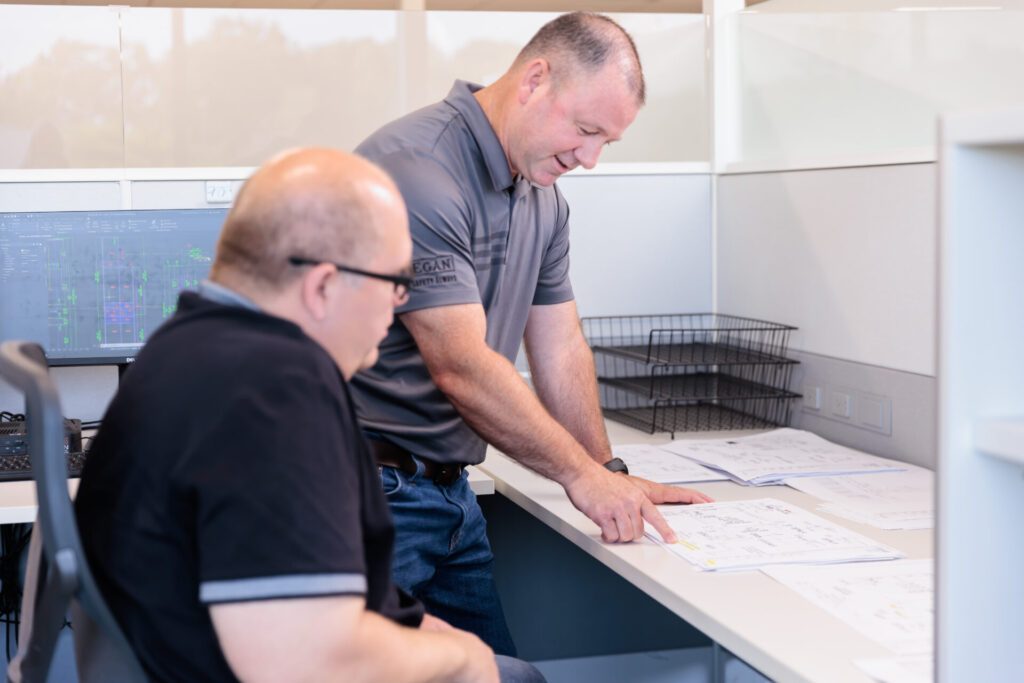
Engineering and design

Engineers also overlay multiple sets of drawings and compare them with field conditions to ensure accuracy across all systems. “Even if we’re not in BIM together, I overlay everything so devices are placed correctly the first time,” said Hapka. Reconciling designs with the realities of construction is just as critical for building envelope systems. “Openings might say ‘30 feet,’ but concrete moves,” said Banse. “We have to show exactly how frames fit so everything installs the way it should.”

By combining these practices, Egan engineers create a seamless connection between design and installation, reducing surprises in the field and helping projects move forward smoothly.

Constructability, Safety, and Quality

At Egan, every engineering decision is guided by constructability, safety, and quality. Designs are created not just to meet specifications, but to ensure systems can be installed, maintained, and operated effectively in the field. Prefabrication adds another layer of consideration, making sure components can be handled safely and fit together as intended. Controlled shop environments allow teams to catch potential issues early and maintain consistent standards across projects.

Engineering That Moves Work Forward
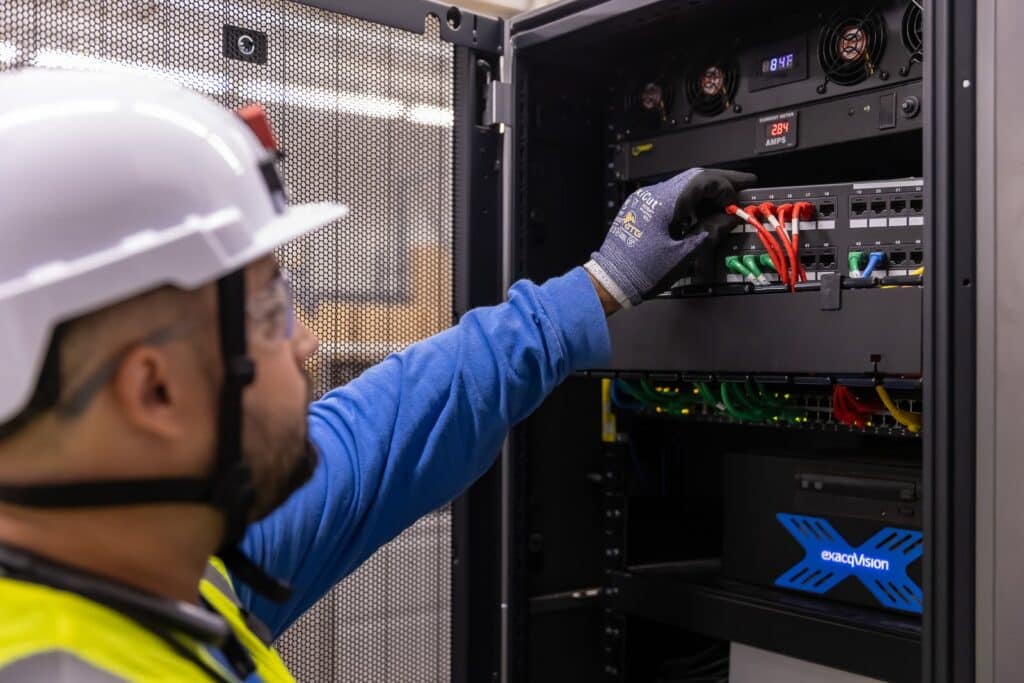
Engineering and design

Across every trade, Egan’s engineering teams are aligned around a single goal: design systems that make construction smoother, safer, and more reliable. Through early planning, thoughtful coordination, and solutions shaped by real-world experience, engineering continues to deliver work that performs right the first time, and strengthens the value Egan brings to customers every day. Ready to leverage more with Egan? Contact us today.
How Engineering Technology is Improving Projects

Friday, June 14th, 2024

Buildings are made up of more than just the concrete walls and floors that specialty contractors provide. Underneath the surface of the conduits, wires, ductwork, and electrical and mechanical systems are formulas, regulations, data, and efficiencies that weave together to create hospitals, high-rises, stadiums, schools, offices, and more. Before they are translated to the jobsite, these factors are carefully put together by teams of engineers and craftspeople  who are strategizing new ways to improve the quality and safety of the work done on the jobsite. 

Engineering practices in the construction industry have evolved significantly since the turn of the century, with new efficiencies and opportunities presenting themselves every day. From virtual construction to prefabrication, more construction projects are being completed off-site than ever before. The jobsite, which used to be a centralized location where everything was built, has now evolved to become a receiving area where pre-engineered and pre-fabricated products are staged and assembled. Taking advantage of these practices is essential for modern project demands, optimizing efficiencies, timelines, budgets, and job site safety.

VIRTUAL PROBLEM-SOLVING

One of the first “construction sites” a project goes through is a virtually simulated computerized model known as virtual design construction (VDC). Egan’s engineers are taking advantage of VDC capabilities to streamline design and improve the entire build process. For more than two decades, VDC has become the tool of choice for the engineering industry, acting as the canvas on which engineers can work and create a model of their final product. 

By beginning with VDC technologies in the early stages of projects, teams can identify project and material needs, potential hazards, and solutions before any work begins onsite. Building Information Modeling (BIM) software, Computer Aided Design (CAD) technology, and other systems enable Egan’s VDC teams to get ahead of the curve, maintain safety and accuracy on the job site, and prevent delays in the building process. 

ENGINEERING SOLUTIONS

The benefits of engineering can be measured by the reduction of total labor hours, costs, and project timelines in conjunction with an increase in the quality of work. By engaging with Egan’s engineers early on in projects, the estimating and proposal processes can be exponentially more efficient and accurate thanks to the systems and software in place. This can also set a firm foundation for efficient prefabrication processes later in the project.

Engineering technology at Egan is not necessarily Artificial Intelligence (AI), though it looks like it on the surface level. Made up of formulas, spreadsheets, and efficiencies, engineering softwares can calculate and assess material, design, timeline, and budget requirements with high accuracy. Incorporating smart engineering can help predict the labor hours needed on projects or tasks, problems that may occur, or other considerations that can be planned for and solved ahead of time. 

PREFABRICATION: THE NEW INDUSTRY STANDARD

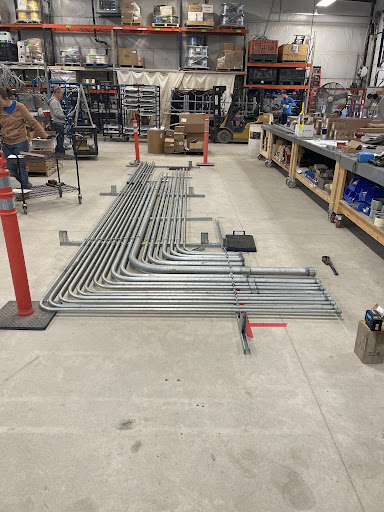
Prefabrication is a standard practice utilized across many of Egan’s trades, and is becoming one of the primary construction sites for any project within the industry. InterClad, Egan’s glass and glazing team, has benefitted from the safety and efficiency of prefabrication since its founding in 1998. Egan’s Mechanical pipefitter teams are able to complete welds and piece together larger parts of projects within a controlled environment, utilizing custom CAD drawings to guide the fabrication process. Egan’s plumbing shop and control panel shop also utilize prefabrication to complete as much of the work as possible independently of the field site, to increase efficiency and safety at all stages of the project.

A prefabrication facility eliminates jobsite waste or excess labor that may come as a result of working in the field. This enables prefabrication experts to receive plans from trades professionals in the field and  engineers and put them into action without slowing down the work on the project. Egan’s recent electrical work on the 568,000 square foot FedEx Distribution Facility in Rosemount, Minn. utilized nearly 3,500 hours of prefabrication work, which resulted in significant cost savings, as well as a reduced risk of injuries and mistakes on the jobsite. The dedicated team completed much of the repetitive or harder-to-complete work in a controlled environment before sending the ready-to-install materials to Rosemount. 

The prefabrication team is taking quality one step further at Egan by documenting and double-checking the quality checkpoints of each build. These checkpoints are printed on a sheet with a unique QR code that is attached to each build. In the field, the QR code can be scanned by any field personnel to provide feedback/comments via a Google Form that provides an easy method for tracking, resolving, and improvements that are made in association with the comments. 

THE FUTURE OF PREFABRICATION

The industry continues to evolve with these engineering practices; prefabrication is quickly becoming a larger operation where teams assemble whole sections of projects in a separate controlled environment independent of the final jobsite. Egan is finding solutions to improve the work we do while maintaining safety and quality at every step. 

Egan sets high standards and goals annually for the number of prefabrication hours that are logged each year. This number directly correlates to the success of projects, revenue, and the entire operational efficiency across each of Egan’s 12 multi-trade expertise. Additional prefabrication capabilities are on the horizon at Egan, with the investment of a new 40,000 square foot facility that will primarily focus on electrical prefabrication being built in Southern Minnesota. As the construction industry continues to evolve, Egan strives to be at the forefront, ready to find solutions that help our customers in every way possible. 

Egan Company Breaks Ground on New Prefabrication Facility

Monday, May 13th, 2024

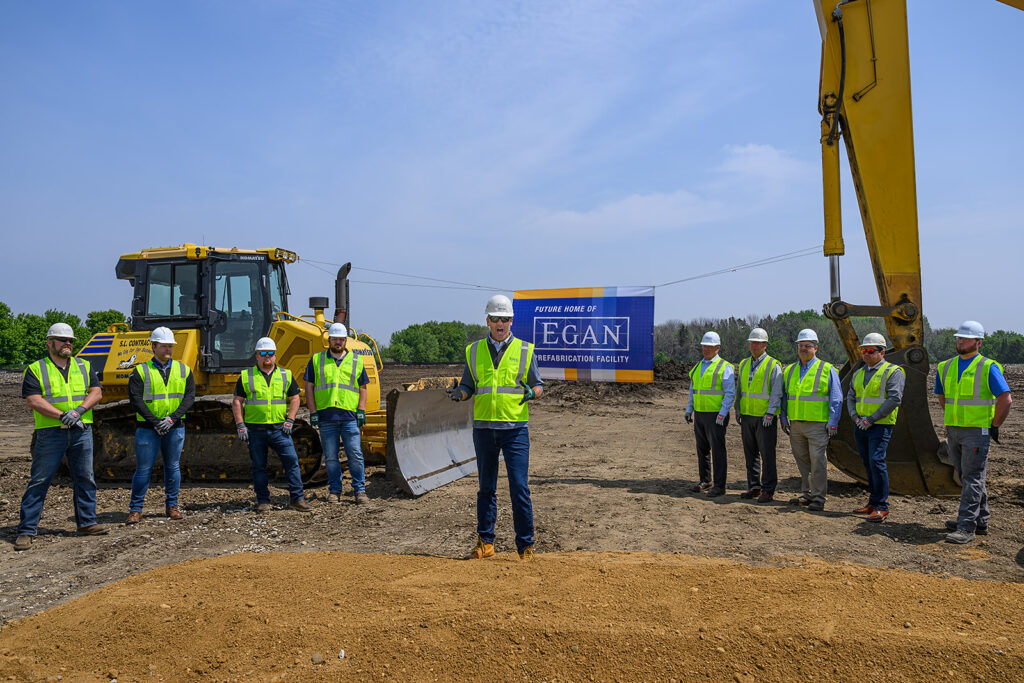
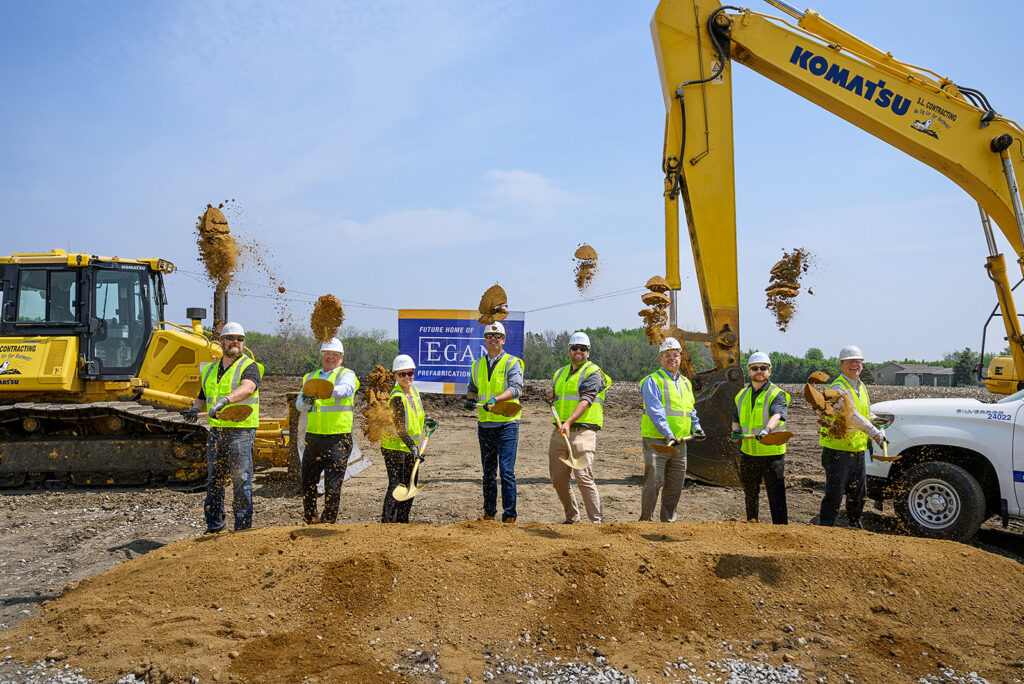
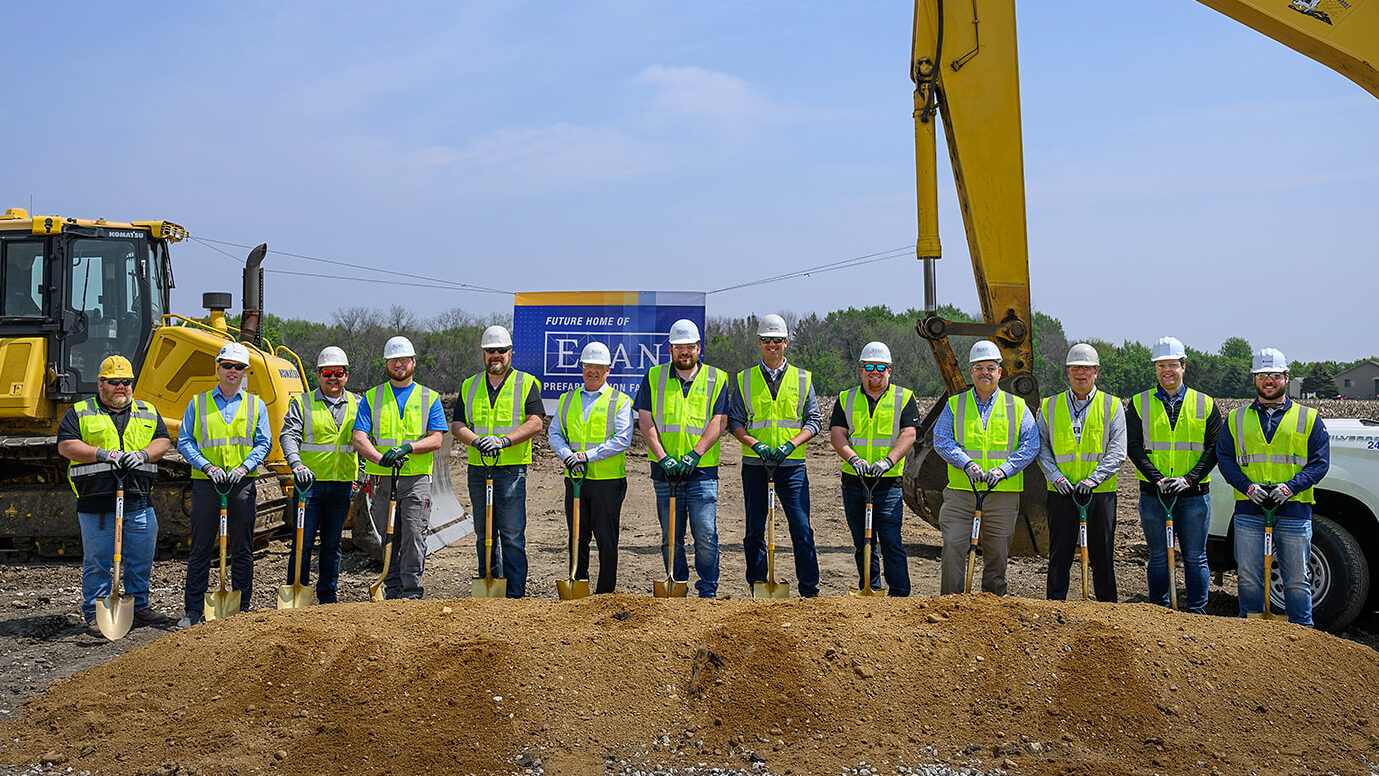
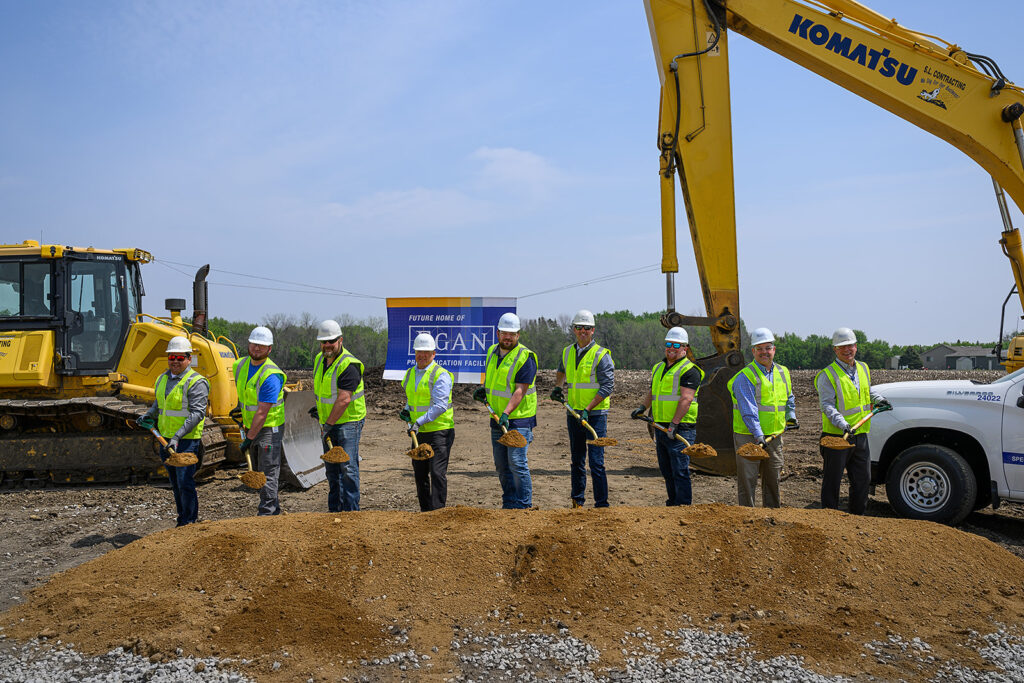
The building of a new prefabrication facility is underway for Egan Company after a groundbreaking ceremony was held in Kasson, Minn. 

Meeting the growing demand of Egan’s Electrical teams, this new facility will enable projects to be streamlined and completed with increased safety, quality, and consistency with “value add” advantages for our customers. The facility will prefabricate various electrical components, assemblies, and systems that are utilized in Egan projects throughout the country.

With the additional 40,000 square foot prefabrication facility, Egan Company continues to grow and expand its presence throughout Minnesota. The general contractor on the project is Knutson Construction. Egan will self-perform the mechanical, electrical, exterior storefront and interior conference room glass, and low-voltage work on the new facility. The building is expected to be completed and operational by 2025. 

Those in attendance included members from the Kasson Chamber of Commerce, the Economic Development Administration, Knutson Construction, and Egan Company leaders and employees who will be moving to the facility. The local ABC affiliate, KAALTV, was also in attendance covering the event.

Prefabrication Proves Priceless

Friday, February 10th, 2017

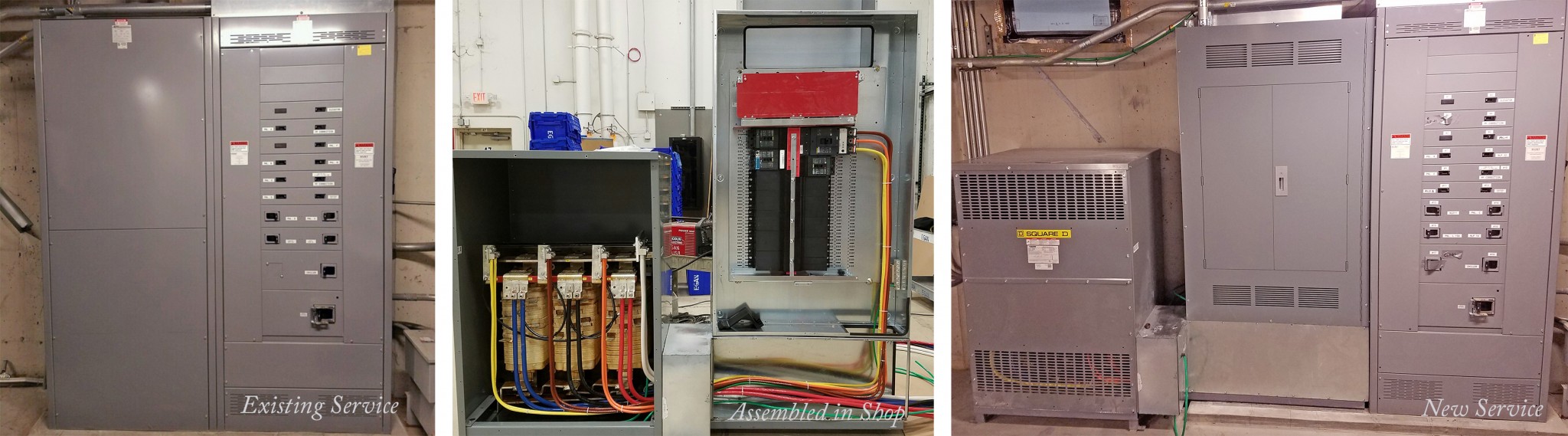
After a recent renovation and expansion, Park Nicollet’s Prairie Center Clinic is now running on a more efficient electrical system. Egan electrician’s converted the existing 208 volt service to 800 ampere, 277/480 volt, 3PH/4W service. In order to maintain daily operations, utility power shut down service was completed during clinic off hours.

The equipment needed to be small enough to move through the existing building corridors and doorways, and then fit into the limited space of the existing service location. To reduce shutdown time, Egan designed, fabricated, and assembled a service panel, feeders, and transformer mounting frame assembly to fit the building’s restricted space requirements.

This utilization of prefabricated components provided added cost savings for the customer and resulted in a reduced project timeline.

Learn more about Egan’s electrical services