Archive for the ‘Services’ Category

Emergency Response Helps to Avoid Costly Property Damage

Thursday, March 12th, 2015

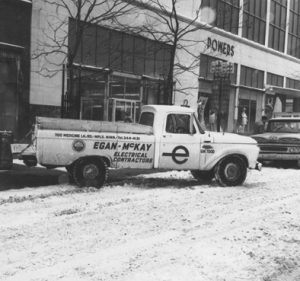
Egan History Image 2Since the 1960s, Egan Company has provided operational support for buildings and their internal systems. Egan’s in-house 24/7/365 call center dispatches qualified trades personnel to service building infrastructures and controls.
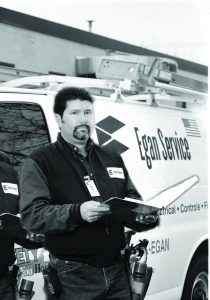
Our emergency response is a service many of our customers find valuable. The League of Catholic Women, a local nonprofit organization, found this service useful this past New Year’s Eve when the boiler in their unoccupied Minneapolis building was not running, causing the temperature to rapidly drop to the mid-30s.

“We were two weeks from closing on the sale of the building in Downtown Minneapolis, and the waterline ruptured,” said Fran Rusciano Murnane, Co-President of the League of Catholic Women. “Chaos would have ensued were it not for the commitment, perseverance, and ingenuity of [Egan’s] Nick Millette, Dale Bocan, and Tony Lawrence.”

The City of Minneapolis had shut off the water two days prior because of the break in the main water line. As a result, the boiler ran out of water and stopped running.

Rusciano Murnane received a recommendation to install 30 space heaters throughout the building. However, the cost to deliver 30 heaters on New Year’s Eve would have been incredibly cost prohibitive, let alone the likelihood of finding a bulk quantity of electric heaters on a holiday.

van00srevisedPromises Made

Egan determined that the best solution was to try to get the boiler running. A tool was created that extracted water from the water heater into the boiler. The boiler ran for the next three to five days so water could continue to be forced into it.

Once a sufficient amount of water was fed into the boiler, it was safely turned on and the building began heating again. However, it was soon determined that another city waterline had ruptured that hadn’t yet been discovered. As a result, the waterlines inside the building were not draining, so the potential for additional burst pipes throughout the 20,000 square foot facility was very probable, resulting in extensive property damage.

Egan drained the water from the building fixtures and waterlines, but soon encountered a new problem: these two ruptured waterlines had caused water to leak through the exterior wall into the electrical room near the electrical panel.

As a result, the electrical components needed repair, but the situation was deemed unsafe with water still over the electrical panel.
Once the City shut off the waterline and the environment was safe, all damaged electrical components were repaired within five days of the initial service request.

Promises Kept

The League of Catholic Women was able to successfully close on the sale of their newly purchased building and avoid any costly property damage.

“I am in awe of the professionalism, skill, intelligence, and kindness of Nick, Tony, and Dale. Each of these gentlemen demonstrated the utmost concern in dealing with a dire situation on New Year’s Eve,” Rusciano Murnane said. “In an era of decreasing concern for the customer, these three concerned individuals exhibited the best training and outcomes that anyone could hope or expect.”

(The Egan team mentioned here includes: Nick Millette, HVAC Service Pipefitter; Dale Bocan, Plumber; Tony Lawrence, Electrician.)

Trending Project Technology

Monday, March 9th, 2015

161024_Egan-Marketing_L_279_0670Staying nimble and accurate is crucial to success, and Egan Company project managers are seeking every edge available to make sure they’re prepared to fulfill customers’ needs. One strategy paying off exceptionally well is the use of tablets equipped with construction apps on project sites.

With this technology, field personnel are able to access accurate drawings and other important documents while looking directly at the feature of which they correspond. The tablets are also connected to a cloud-based server, meaning everything the foremen or installers are looking at is 100% current. As soon as an Egan Building Information Model (BIM) engineer adds a change or addendum, the information is automatically updated to the tablets.

There are several key advantages to adopting this technology. The first is the organization and spread of information is completely streamlined; there’s no need to wait for new drawings or walk back-and-forth from a table to the building feature. The construction apps, like PlanGrid, also show what our field employees need to avoid when installing.

“The crew can actually fly through the model as if they were standing in the building,” said Marty Verduzco, Egan Company Senior Project Manager. “It even shows the features from other trades where they will need to work around.”

The benefits in time management and organization are substantial, but they pale in comparison to the technology’s biggest advantage – reducing the risk of mistakes.

Oftentimes, renderings on paper will be very large and have to be located on a table away from the actual building space, or on a computer hidden away in a trailer. With tablets, there’s no need to piece everything together by memory. And with instantaneous updates, there’s no re-printing, no delivery, and no change-of-hand-process. The risk of having outdated materials lying around is virtually removed – literally.

There are few things more frustrating than installing a day’s worth of material only to realize some small detail had changed and you need to re-do everything. By reducing mistakes, installers can help eliminate the possibility of re-work.

Since Egan began work at the 3M 280 Lab Building in Maplewood, Minn., there have been 37 addendums made to BIM drawings during the installation phase.

“Without this technology, it would have been practically impossible to get all the changes to the field efficiently,” Verduzco said.

The tablets work as tools to strengthen the connection between the installers/foremen onsite and the BIM engineers in the office. Right now they are being implemented sparingly, but as more positive feedback rolls in, the trend of usage will likely spread.

“Having this technology onsite helps to realize the full potential of our BIM engineers and our CAD software,” said Nick Ziegler, Egan Company BIM Group Manager. “It makes communication easier, and the easier an installer/foreman and an engineer can understand each other, the better a project can move forward with speed and surety.”