News
Built to Connect: The Role of Structured Cabling
March 18, 2026
“Reliable” and “structured” are more than technical terms; they describe the kind of relationship today’s buildings require from their connectivity. That reliability powers nearly every function inside a modern facility, even though the infrastructure behind it often goes unnoticed. Structured cabling supports the systems people rely on every day, from wireless networks and phones to security and surveillance. To gain an inside perspective, we spoke with Ben Jahnz and Jose Gonzalez Jr., Account Managers at Egan Company, about how structured cabling supports modern buildings and why thoughtful infrastructure design is essential to reliable systems.
The Backbone of Building Technology
Structured cabling serves as the foundation for nearly every system in a facility. “It’s the backbone of everything,” said Gonzalez Jr., “Everything connects back through the network.” Structured cabling links devices throughout a facility to a centralized network, supporting voice, data, wireless devices, and video communication. While it is often associated with standard Ethernet cabling, the system itself varies by building and by use. “It’s really the infrastructure that a business operates on,” Jahnz said. “All of the devices tie back to that network room.”
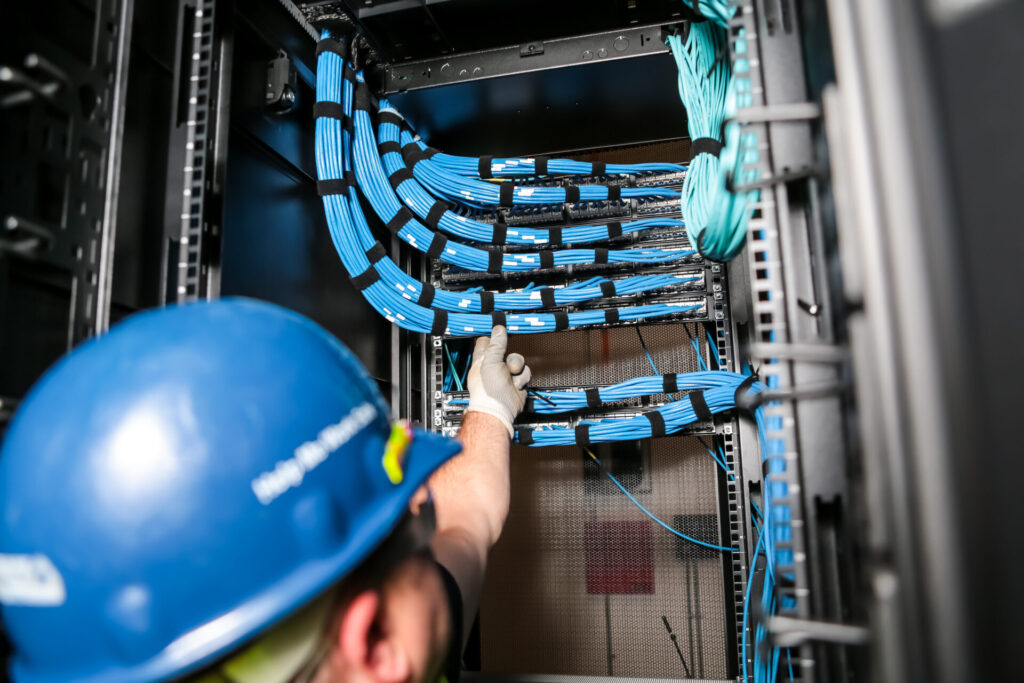
Design decisions are driven by customer needs, device requirements and performance expectations. “Every network infrastructure point is different,” Gonzalez Jr. said. “Some run at higher speeds than others and that drives what type of cable is needed.” While Egan aims to future-proof systems whenever possible, those decisions must align with budget and long-term plans.
Supporting Complex Building Systems
Structured cabling plays a critical role far beyond traditional IT, supporting systems such as wireless access points, security, surveillance, and building automation. As sites grow more connected, infrastructure design becomes increasingly important. “Cameras are a good example,” said Jahnz. “If you have enough cameras across a site, each one takes up bandwidth, and that can impact performance if the infrastructure isn’t designed correctly.” Designing cabling with these demands in mind helps ensure all systems perform reliably without compromising network efficiency.
Proper installation, however, is only the beginning. Egan places a strong emphasis on thorough labeling and documentation to support long-term reliability and ease of maintenance. “Once the cabling is tested and certified, it typically doesn’t go bad unless something physically happens to it,” Gonzalez Jr. said. “What matters most after that is labeling and documentation.” Every cable is clearly labeled and mapped back to its termination point, giving facility teams a complete and accurate record of their infrastructure. This level of detail allows customers to quickly identify connections, make changes with confidence, and troubleshoot issues without unnecessary downtime. It also reduces reliance on specialized tools or outside support, helping facilities remain operational and adaptable long after installation is complete.
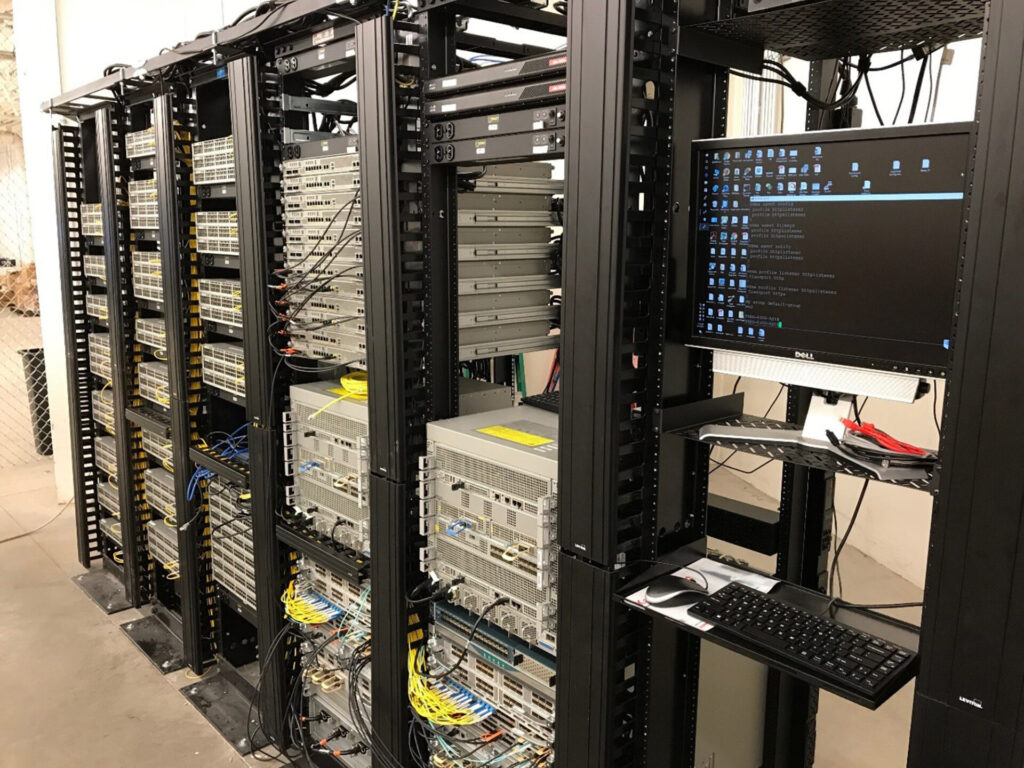
That attention to detail becomes especially important in environments with critical uptime requirements, such as healthcare facilities and data centers, where expectations are often defined before installation begins. “Most of the time, those specs are already set by IT or network engineers,” Gonzalez Jr. said. “Our job is to execute to those specifications to industry standards and provide the documentation and test results.” By meeting those requirements precisely, Egan helps ensure systems are not only installed correctly, but fully supported throughout the lifecycle.
Why Choose Egan for Structured Cabling Solutions?
Like much of Egan’s operating procedures across all trades, the approach to structured cabling is rooted in clarity, accountability, and long-term partnership. With integrated, in-house teams, customers benefit from streamlined coordination and a higher level of ownership across complex projects. “From a customer perspective, it’s one point of contact,” Jahnz said. “If we can manage it all in house, it’s usually more efficient than coordinating multiple contractors.” That structure reduces handoffs, minimizes miscommunication, and allows teams to stay aligned from design through installation and closeout.
Just as important is Egan’s commitment to standing behind its work. Accountability and follow-through are not treated as extras, but as expectations. “If we make a mistake, we fix it,” Jahnz said. Those moments, he explained, often matter more than projects that go perfectly from day one. By addressing issues directly and transparently, Egan builds trust that extends well beyond a single project.
That trust is reinforced through responsiveness and accessibility. For Gonzalez Jr., being available when customers need support is a defining part of the relationship. “Picking up the phone and responding is huge,” he said. “A lot of times, that’s what builds and maintains the relationships we have with our customers.” Whether it’s a question during installation or a need that arises years later, customers know they can rely on a team that remains engaged and invested.
While structured cabling may remain hidden behind walls and ceilings, the value it delivers is anything but invisible. Through technical expertise, clear communication, and a commitment to doing the right thing, Egan provides infrastructure that performs reliably and a partnership that last. Customers may not see every cable, but they experience the difference in how projects are managed, supported, and delivered over time. To learn more or discuss a structured cabling project, contact Egan’s team to start the conversation.
Related Posts